
Chasing the Bliss: A Tango Reflection from Podgorica
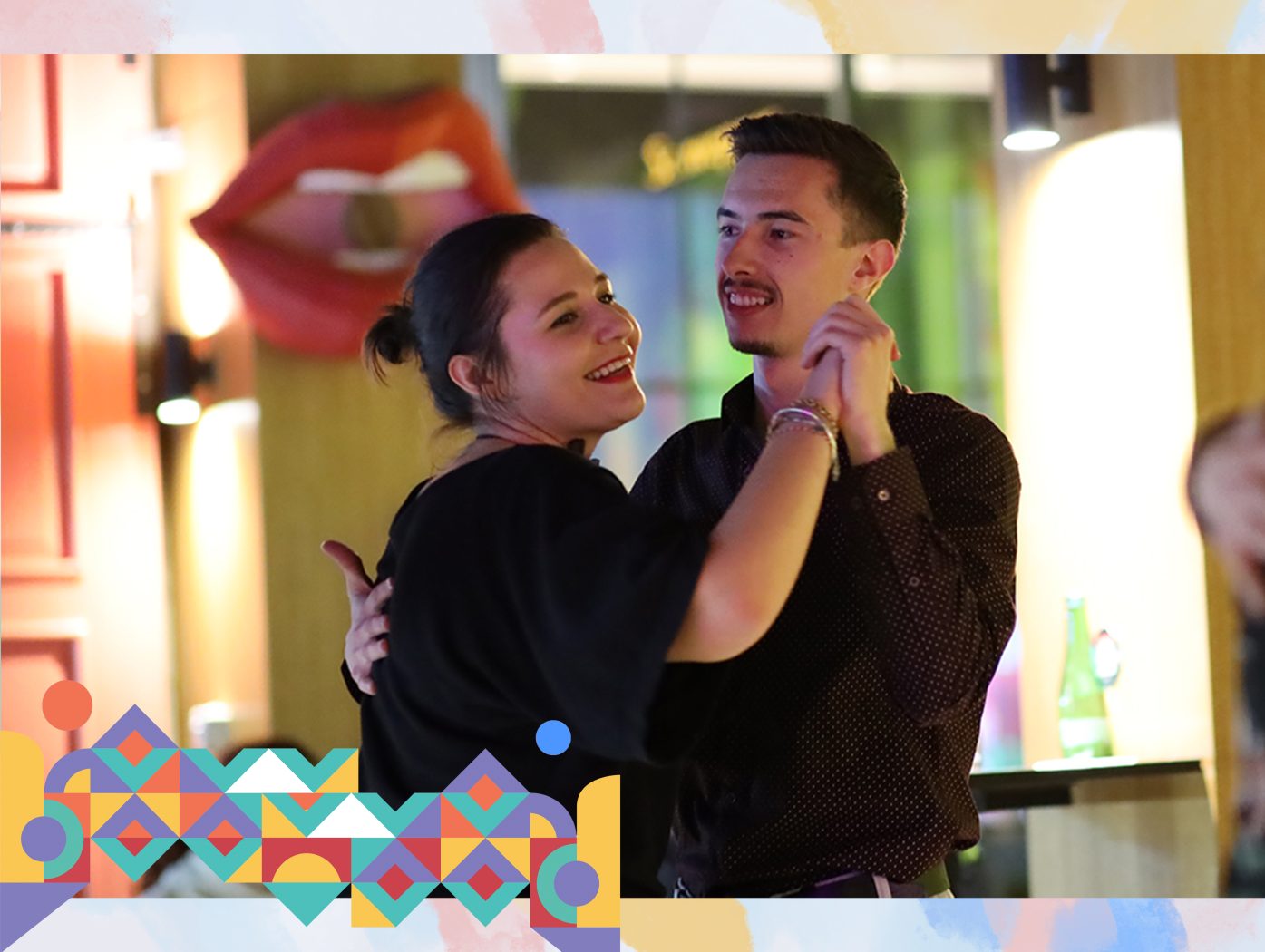
Angela Nastevska (young mentor in Familija Tangovi)
There’s a quiet ritual I’ve fallen into when I’m not dancing—a kind of meditative observation.
I sit close to the edge of the dance floor, not quite part of the action, yet completely
immersed in it. At a recent small festival in Podgorica, Montenegro, I found myself in that
familiar spot again. New venue, new city, same habit.
Usually, these moments stir reflections on the beauty of tango—the silent communication,
the poetics of movement. But this time, something else struck me. As I watched the
tangueros on the dancefloor, I began to recognize many of the faces. Dancers I’d seen in
Sarajevo, Belgrade, Skopje…
And a question emerged:
What drives so many of us to travel across cities and borders—for a dance?
That thought stayed with me. I carried it into my first tandas of the night, which
were—truthfully—stressful. Dancing with strangers as a relative beginner (barely a year into
this tango journey) is never easy. Every embrace is a new language to decode. You wonder:
Am I good enough? Will they enjoy dancing with me?
But as the music continued and the hours unfolded, something softened. I stopped
obsessing over technique and comparison. I reminded myself that this journey is mine. It’s
not a race. There will always be better dancers—and that’s okay. I’m here because I love it.
The next day I found myself in conversation with a much more experienced dancer who
invited me to dance. I was nervous—intimidated, even—but I said yes. And once we began,
something magical happened.
My body moved without thought. There was no internal chatter, no planning the next step.
Just sensation, music, connection. We glided through the tanda in a kind of shared
presence. I was no longer aware of time, or space, or even myself. My body and mind were
entirely in sync.
Flow.
It’s rare. That altered state where everything aligns—the body knows exactly what to do, and
the mind lets go. You’re no longer dancing consciously; you are the dance.
When the tanda ended, my partner smiled, thanked me, and walked me back to my seat.
And as I sat there, still flushed with the afterglow of that experience, I finally understood.
That is why we travel.
We’re not just moving from city to city for milongas and tandas. We’re chasing those rare
moments of flow—those brief instances when two people, often strangers, connect so
completely that the world seems to disappear.
Tango is addictive—not because it’s glamorous or even always enjoyable. But because
every so often, it offers you a glimpse of something sublime. Something real. And it’s that
possibility, that promise, that keeps us coming back.
Coming to the next city, the next embrace, the next tanda.